As parents, it’s easy to focus on milestones like first words, first steps, and starting school, but healthy vision is just as important for your child’s development. An eye exam for children is one of the best ways to ensure your child’s vision is developing properly and to identify potential concerns before they begin affecting daily life. A child’s eyesight plays a major role in learning, coordination, reading, attention span, and social interaction. In fact, some learning difficulties in young children can be linked to undetected vision problems.
Scheduling a pediatric eye exam early can help identify concerns before they begin affecting daily life. If you’ve been wondering when a child should have their first eye exam appointments or what happens during the visit, understanding the basics can help you feel more prepared and confident.
Table of Contents
When Should a Child Have Their First Eye Exam?
Many parents assume school screenings or routine pediatric checkups are enough to monitor vision, but comprehensive eye exams are still important. Vision screenings can miss certain eye conditions, especially in younger children who may not realize they are having trouble seeing.
If you’re wondering what age child first eye exam appointments should happen, experts recommend the following timeline:
- First Eye Exam: Between 6 and 12 Months
This early visit helps confirm that your baby’s eyes are developing properly and working together as they should. The eye doctor can also check for signs of focusing issues, eye misalignment, or other developmental concerns.
- Second Eye Exam: Between Ages 3 and 5
At this stage, children are developing important visual skills needed for reading and learning. This exam helps detect issues like lazy eye, near-sightedness, or focusing difficulties before children enter school.
- Third Eye Exam: Before First Grade
Before starting school, children should have an eye exam to ensure they can clearly see classroom boards, books, and digital screens. Good vision can play a major role in classroom confidence and academic performance.
Following these milestones can help identify vision concerns early and support healthy visual development throughout childhood.
Why Early Eye Exams Matter?
Children often assume the way they see is normal because they have nothing to compare it to. As a result, vision problems can go unnoticed for years without a proper eye exam.
Early detection is important because some conditions, including amblyopia (lazy eye) and crossed eyes, respond best to treatment during childhood when the eyes and brain are still developing. Regular eye exams can also help identify issues that may affect reading comprehension, hand-eye coordination, concentration, and participation in school or sports.
Even if there is no family history of vision problems, routine eye exams remain an important part of preventive healthcare.
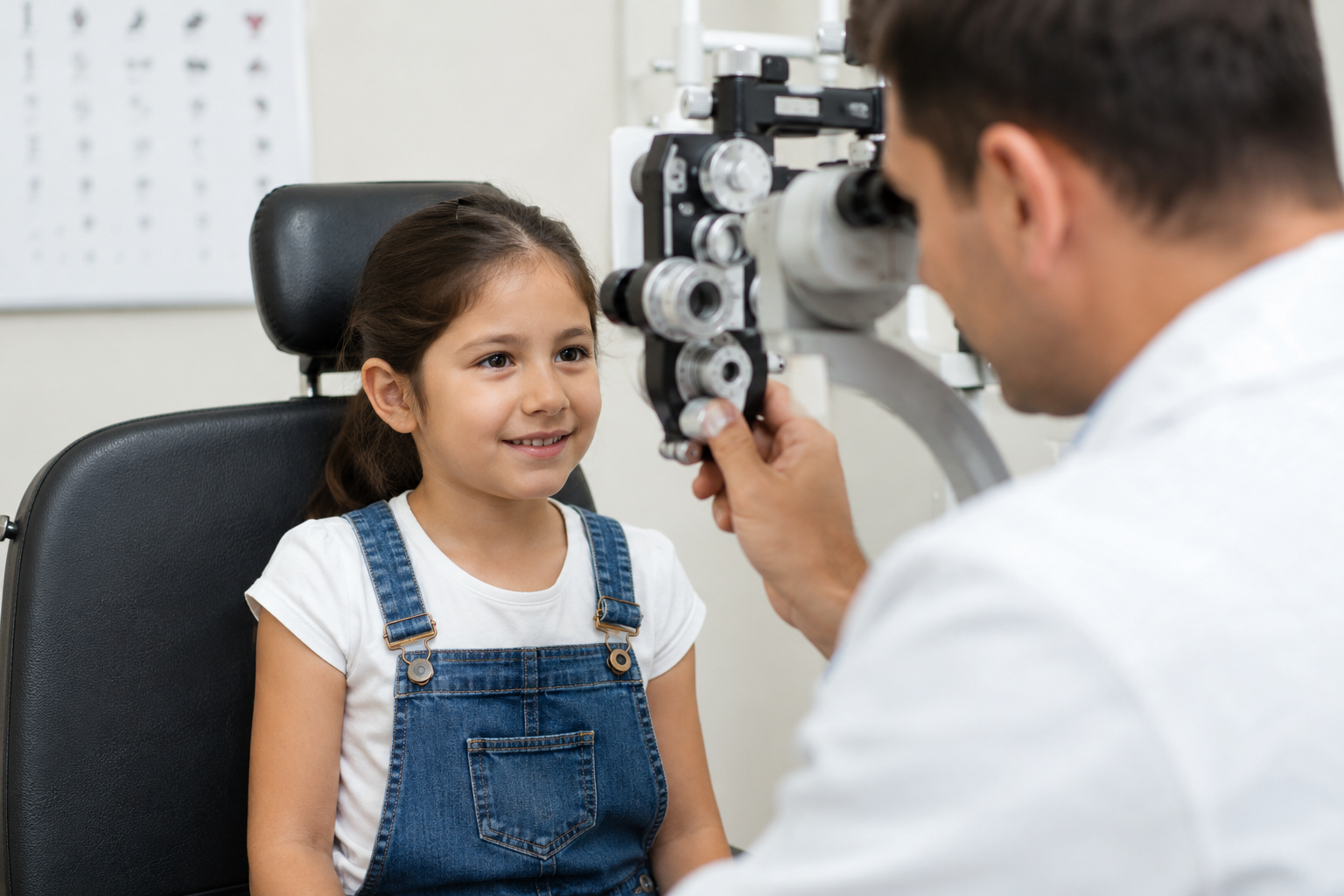
What to Expect During the First Eye Exam?
Knowing what to expect at your first child’s eye exam can make the experience less stressful for both parents and children. The tests are simple, painless, and designed specifically for your child’s age and developmental stage.
For Infants
- Pupil Responses – Checks how the pupils react to light and whether the eyes respond normally.
- Fixate and Follow – Evaluates whether the baby can focus on and track moving objects.
- Preferential Looking – Uses patterns or images to estimate how clearly the infant can see.
For Young Children
- Visual Acuity – Measures how clearly your child can see letters, symbols, or pictures at different distances.
- Lazy Eye Screening – Detects amblyopia, where one eye may be weaker than the other.
- Stereopsis (3D Vision) – Tests depth perception and how well both eyes work together.
- Eye Tracking – Evaluates how smoothly the eyes follow moving objects.
- Convergence – Checks how the eyes work together when focusing on nearby objects.
- Color Vision – Identifies potential difficulty recognizing colors.
- Ocular Health – Examines the overall health of the eyes, retina, and surrounding structures.
These tests help doctors evaluate visual development and identify concerns early.
Common Warning Signs
Sometimes children do not realize they have vision problems, so parents should pay attention to behavioral and physical signs that may indicate a need for a child’s first eye exam or follow-up visit.
- Holding books or tablets too close to their face
- Frequently rubbing their eyes or squinting when looking far away
- A noticeable eye turn (one eye drifting inward or outward)
- Complaints of headaches or blurred vision
- Losing their place while reading or tilting their head often
If you notice any of these signs consistently, scheduling an eye exam can help determine whether vision problems may be contributing to the issue.
How to Prepare Your Child for the First Eye Exam
Parents often wonder how to prepare child for first eye exam visits. A little preparation can help children feel more comfortable and cooperative during the appointment.
- Explain the visit in simple, positive terms
- Reassure them that the tests are painless and may even feel fun
- Bring a favorite toy or book for comfort
- Schedule the appointment when your child is usually alert and well-rested
It can also help to avoid describing the appointment as “scary” or “serious.” Keeping the conversation calm and encouraging can make the experience more enjoyable for your child.
First Eye Exam Expectations
Understanding first eye exam expectations can help parents feel more confident before the visit. Most exams are quick, interactive, and child-friendly. Eye doctors often use lights, pictures, shapes, and simple games instead of traditional testing methods.
The doctor may also ask about family eye health history, developmental milestones, screen time habits, and any concerns you’ve noticed at home or school. Depending on the results, they may recommend monitoring, glasses, or future follow-up visits.
Many children complete their exams with little difficulty, especially when parents remain calm and supportive throughout the process.
Conclusion
Early eye exams play an important role in your child’s overall health, learning, and development. Scheduling exams at the recommended ages can help detect vision problems before they interfere with school, reading, sports, or daily activities. By understanding the process, recognizing warning signs, and knowing what to expect, parents can feel more confident about supporting their child’s long-term eye health and clear vision for years to come.
About Dr. Azhar I. Salahuddin

Dr. Azhar I. Salahuddin is an ophthalmologist at InSight Vision Center and is fellowship-trained in cornea, external diseases, and refractive surgery. Dr. Salahuddin has been performing cataract surgery for over 19 years and specializes in ocular reconstruction, corneal transplantation surgery, as well as vision correction through a variety of intraocular lenses. Dr. Salahuddin is board-certified by the American Board of Ophthalmology and was trained at Boston University.


Best Electrolytes for Breastfeeding Moms in 2026
Compare 7 electrolyte brands for breastfeeding moms in 2026, including Buoy, Liquid I.V., LMNT, and more. Explore ingredients, benefits, and…