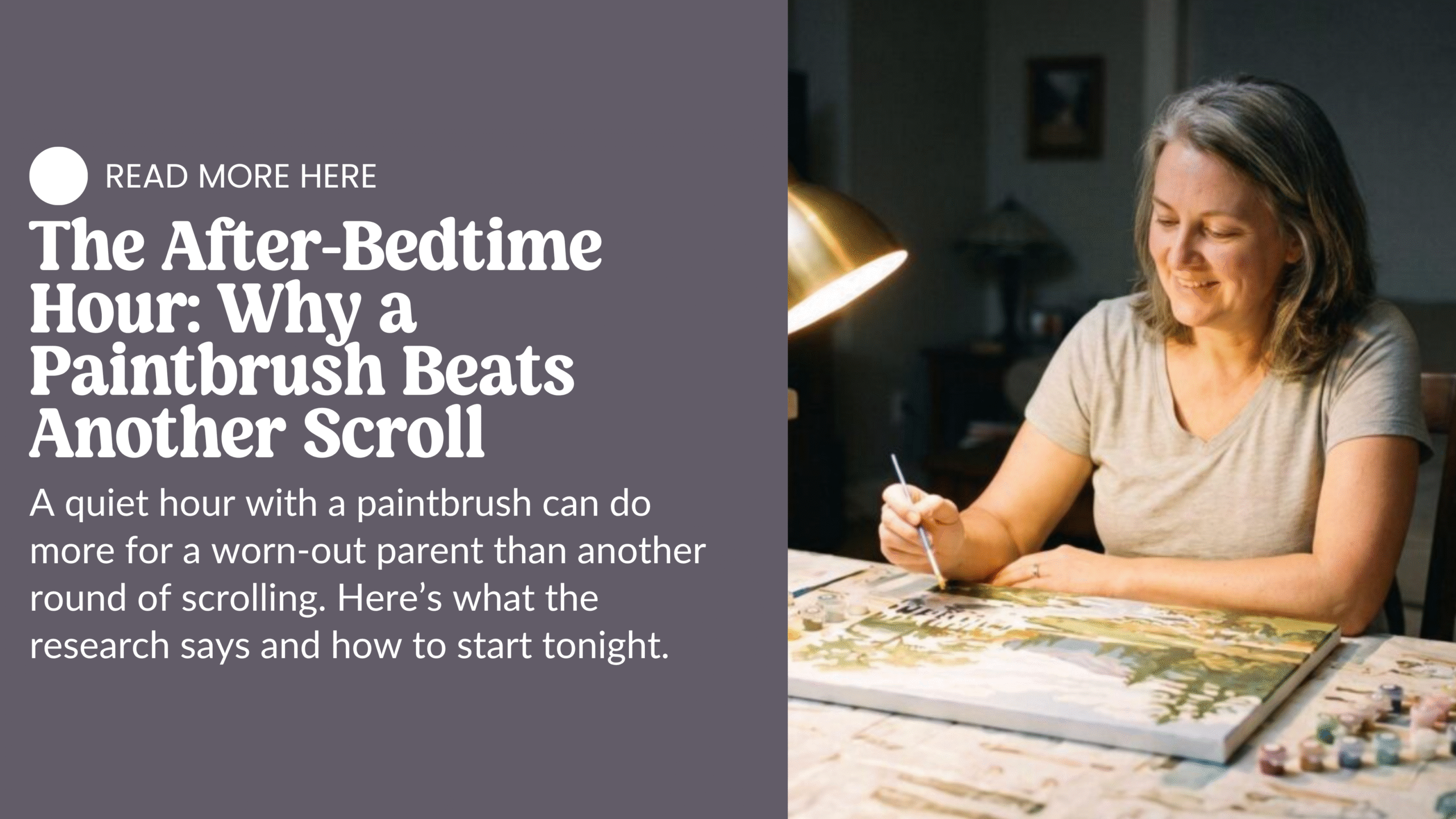
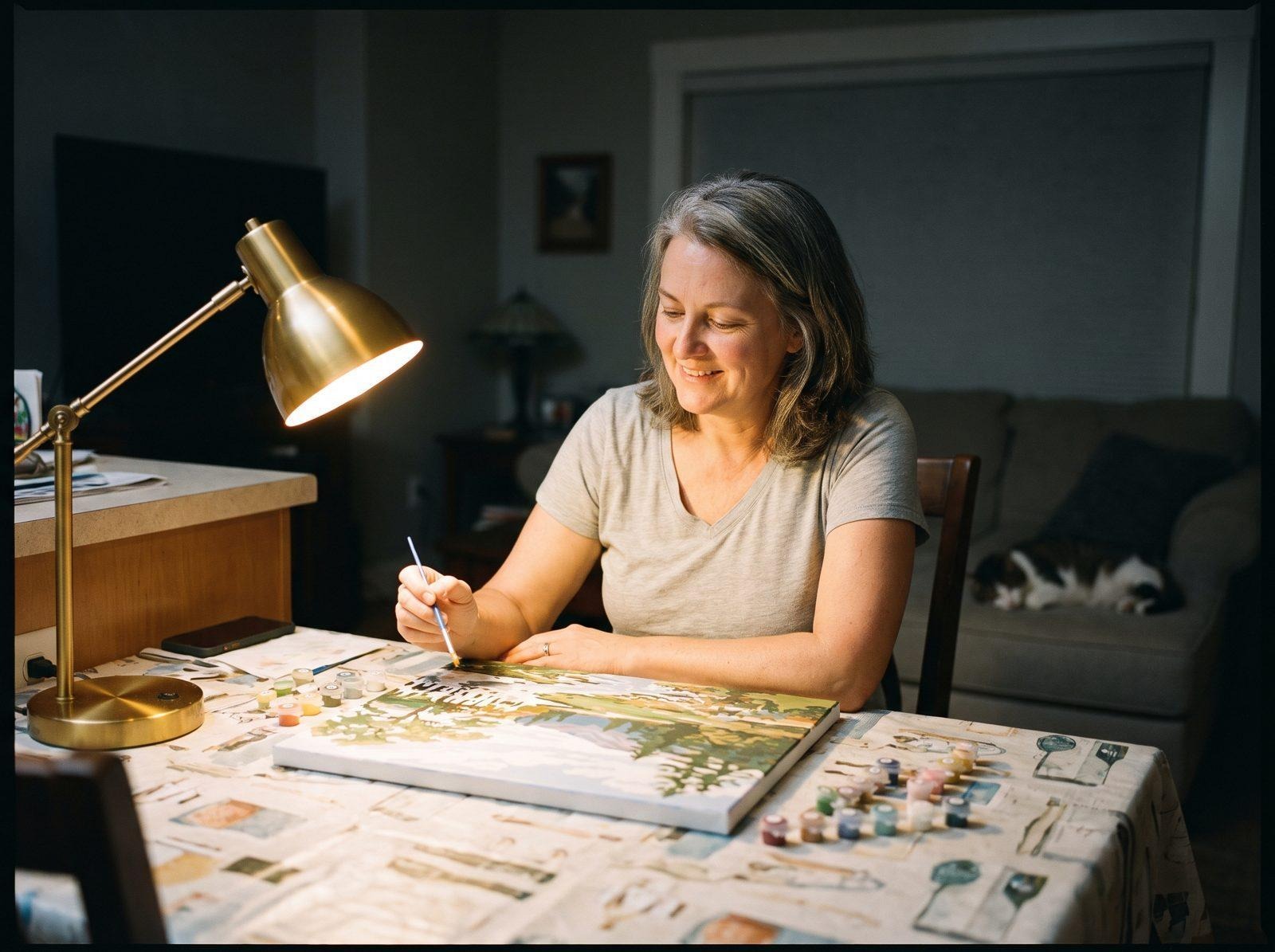
The kids are finally down. The dishes are done, or at least stacked. You’ve got maybe ninety minutes of the day that belong to nobody else, and most of us spend them the same way: phone in hand, thumb moving, mind somewhere else.
That hour rarely feels restful. You scroll past forty things you didn’t choose to see and go to bed feeling oddly emptier than before. There’s a better use for it, and it doesn’t ask for talent or a studio. It asks for a small, defined task that your hands can do while your head quiets down.
Table of Contents
Start With a Task That’s Already Planned for You
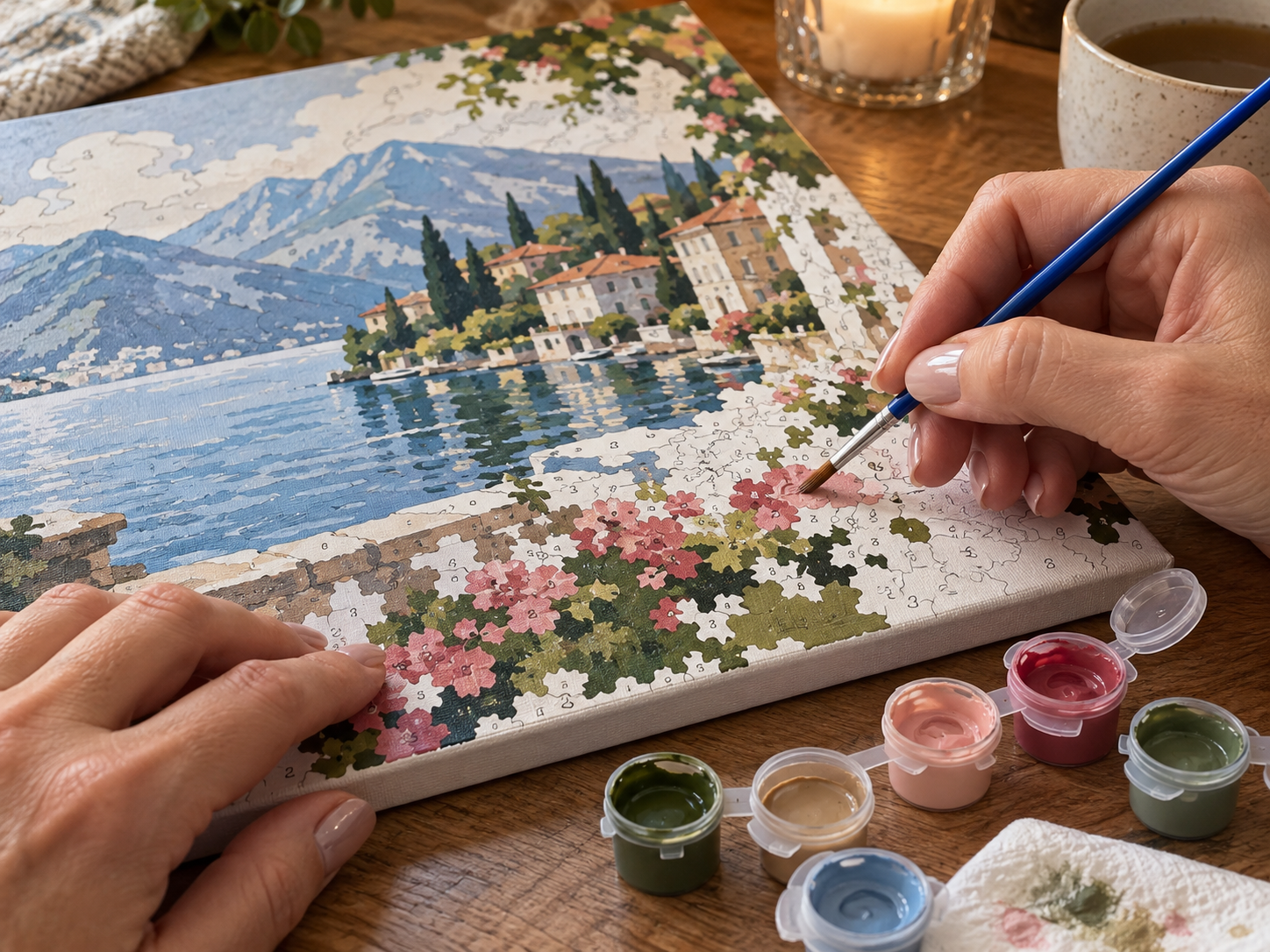
The trouble with “just be creative” is the blank page. A tired brain doesn’t always have the energy to come up with ideas at 9 p.m., let alone figure out where to start. That’s where paint by numbers comes in. Instead of planning a project from scratch, you work with a pre-designed canvas divided into numbered sections. Each number corresponds to a paint color, so you always know what to do next.
A typical paint by number kit includes a printed canvas, small pots of acrylic paint, and brushes. You don’t need to know how to draw, mix colors, or plan a composition. You simply match the numbers and gradually fill in the picture. Some people work through one color at a time, while others finish small sections before moving on. There’s no strict order to follow, which makes it easy to fit painting around an unpredictable family schedule.
Kits come in different difficulty levels. Beginner designs usually have larger sections and fewer colors, making them easier to complete in short sessions. More detailed designs feature smaller spaces, finer lines, and more color variations. If you’re new to painting, starting with a simpler design can help you get comfortable controlling the brush before tackling anything intricate.
The subject matters, too. You can find everything from flowers and animals to landscapes, city scenes, and abstract patterns. Choose something you’ll enjoy looking at as it takes shape. A bright bouquet might feel cheerful after a long day, while a quiet mountain scene could be more your style.
One of the biggest advantages of paint by numbers is that you can stop and start without losing your place. Even ten or fifteen minutes is enough to fill a few sections. Your first attempts might look uneven, especially around tiny details, but brush control tends to improve with practice. As more numbered spaces disappear, the picture slowly comes together, giving you something tangible to show for those small pockets of free time.
Parents Are Running Hot
If you feel more frazzled than your childless friends, you’re not imagining it. The U.S. Surgeon General’s 2024 advisory on parental mental health reports that, in 2023 data, 48% of parents said most days their stress is completely overwhelming, compared with 26% of other adults. The advisory lists time demands, isolation and technology among the stressors.
Notice that “time demands” is on that list. You can’t add hours to the day. What you can change is what the few free ones do for you.
Most advice for stressed parents is another item on the to-do list: meditate, journal, exercise more. Those are fine ideas, but they ask for effort at the moment you have the least. A hobby with the decisions already made asks for much less. You don’t need to feel calm before you start; the calm tends to show up around the second color.
What a Short Session With a Brush Actually Does
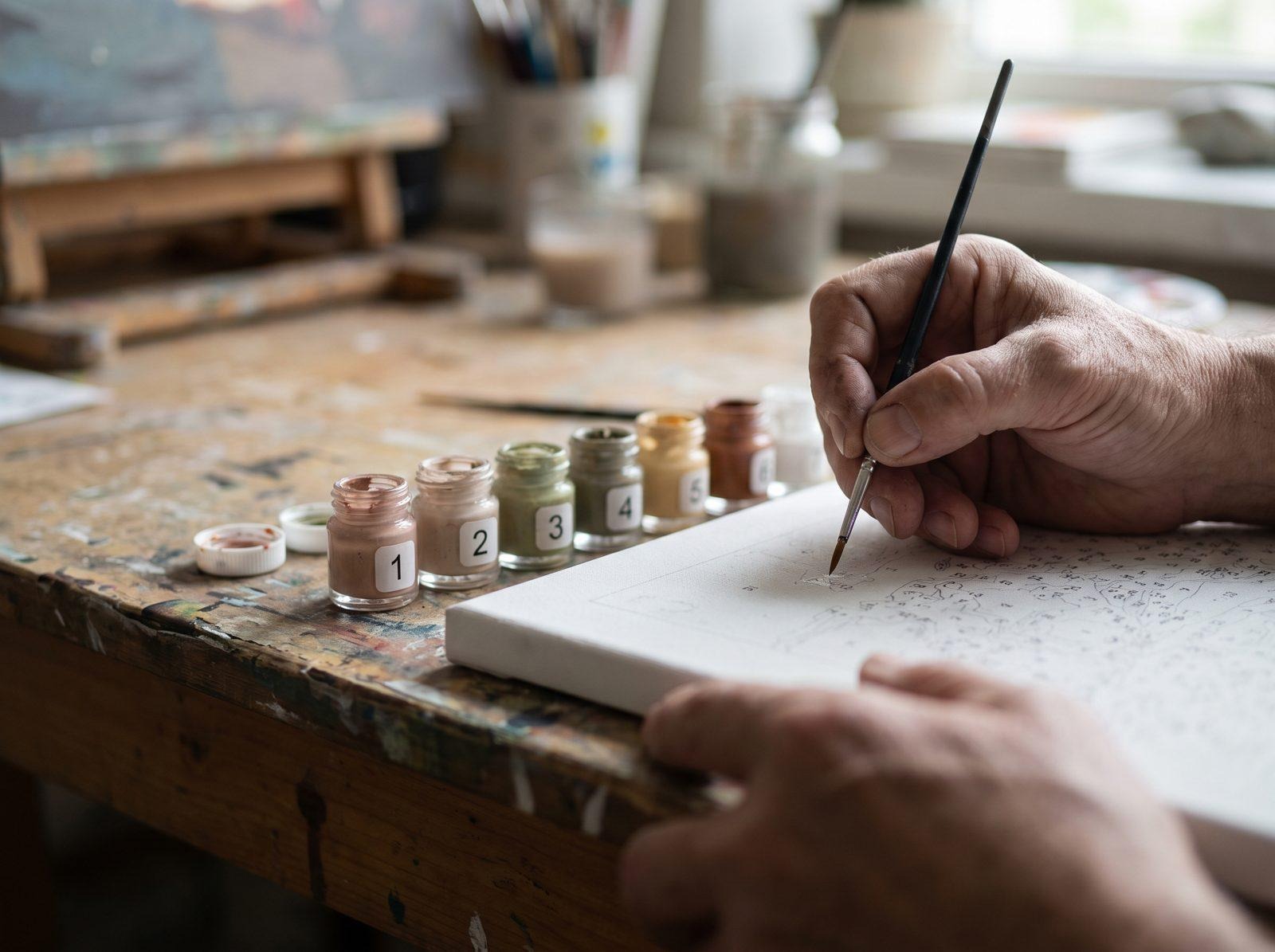
Researchers have measured this. In a 2016 study published in Art Therapy, Girija Kaimal and colleagues had 39 healthy adults make art for 45 minutes, and found that cortisol levels dropped significantly afterward, as measured in saliva samples. Participants described the session as relaxing and said they sometimes lost track of themselves in the work.
It’s a small study, and it didn’t test paint-by-number kits specifically. Still, people in it had varied art backgrounds, and prior experience made no significant difference. You don’t have to be good at this for it to help.
The flow they described is familiar to anyone who has lost an hour to a jigsaw puzzle or a knitting row. Attention narrows to the next small task, and the running list of worries in the background goes quiet for a while. It doesn’t solve the week ahead. It does give your nervous system a break from it, and that’s worth an evening.
Making It a Habit Instead of a One-Off
The hard part isn’t the painting. It’s protecting the hour. Leave the canvas out on the table so starting costs you nothing, and put the phone in another room. Aim for twenty minutes, not two hours; you’ll often keep going. Keep brushes in a jar and paint pots capped, so cleanup takes one minute rather than ten. Mark off finished sections with a pencil tick if you like seeing the progress. Some moms keep a finished canvas on the wall as a reminder of the evenings they claimed back.
Be honest about your limits, too. A sore back or a bad shoulder will end a painting night early, and ignoring that doesn’t help anyone. Our piece on parents, chronic pain and staying present makes the case that looking after your own body is part of looking after your kids. Take breaks, and stop when it stops being pleasant.
Let the Kids In on It, Sometimes
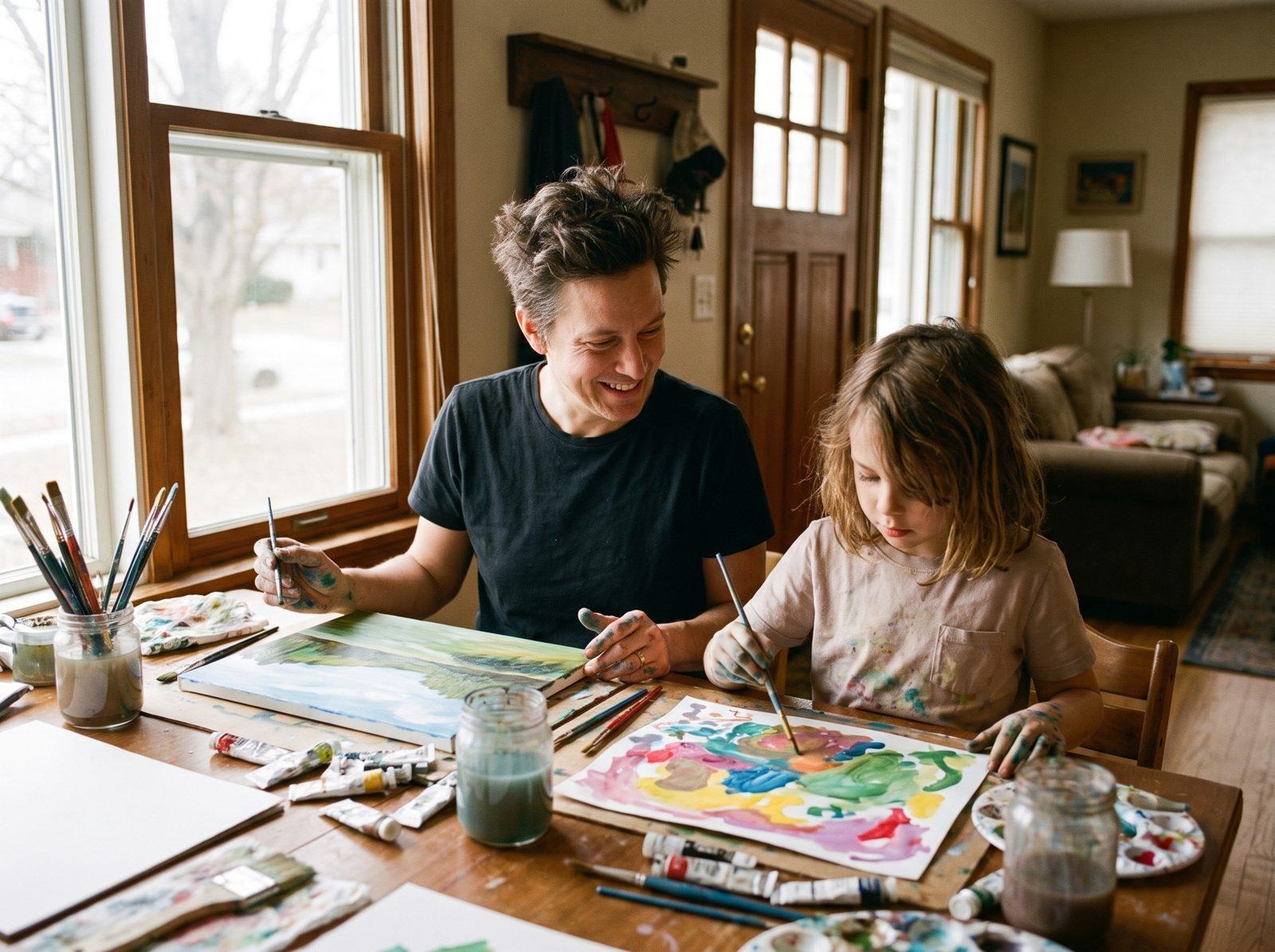
Not every session has to be solo. Weekend afternoons can be a shared table, with kids working on their own project while you chip away at yours. If they need ideas for their side of the table, try these easy paper crafts or let them get creative with unicorn crafts.
What you’re modeling matters more than the finished canvas. Kids watch how adults spend free time. Seeing you pick up a brush instead of a phone tells them something that no lecture about screens will.
So tonight, try it. Open the kit, pick one number, and fill in one patch. If you hate it, you’ve lost twenty minutes you’d have spent scrolling anyway. If you don’t, you’ve found an hour that’s finally yours.