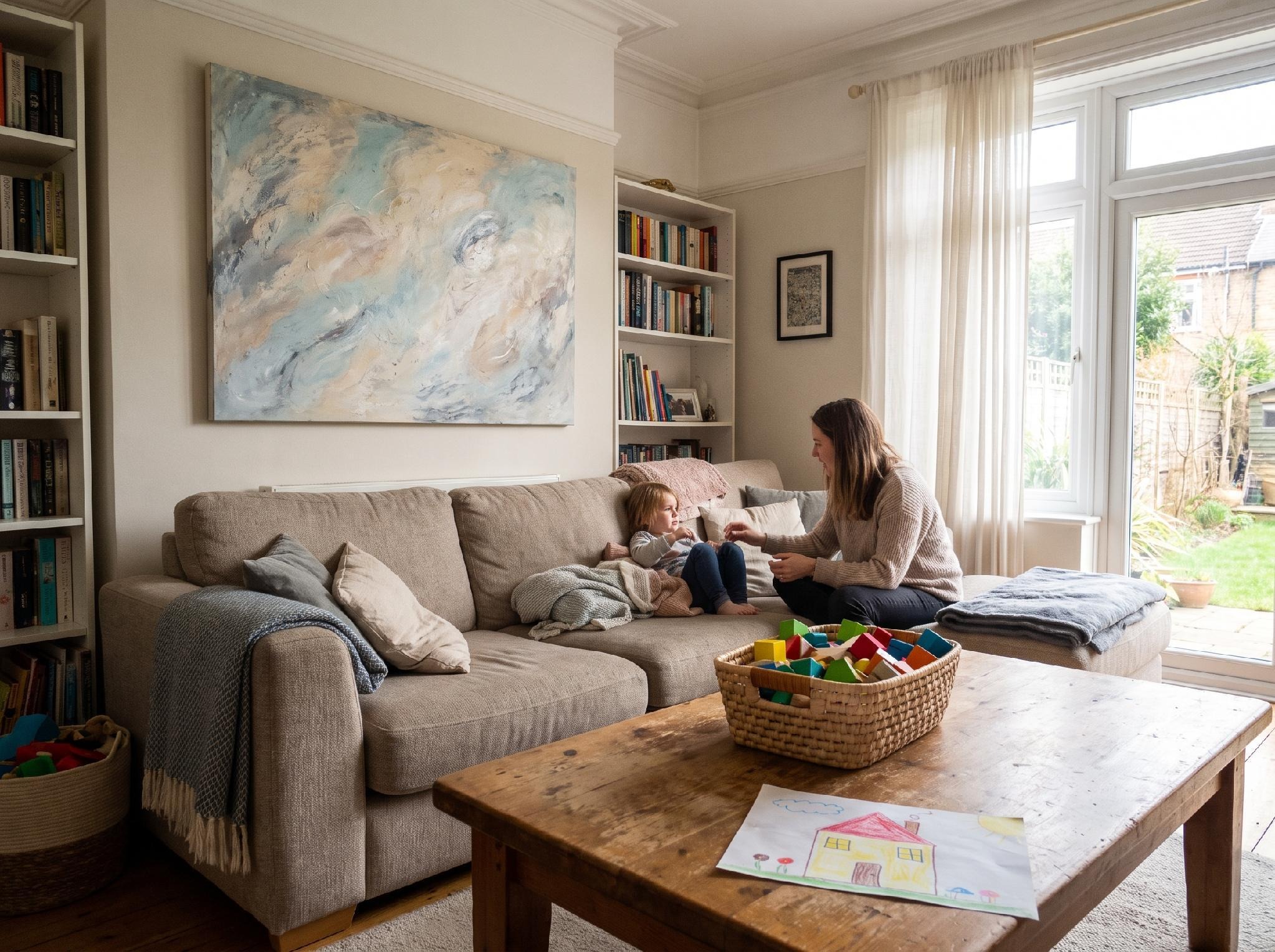
Walk into most family living rooms at six in the evening and you’ll see the same thing. Shoes by the door, a half-built block tower, a laundry basket nobody’s claimed. The walls are usually the quietest part of the room, and often the emptiest.
That’s a missed chance. Art is the one thing in the house that doesn’t need picking up, charging or folding. It just sits there and makes the room feel finished. The trick for parents is choosing something that can live next to chaos, and hanging it so the chaos can’t reach it.
Table of Contents
Why Flat Prints Disappear in a Busy Room
A flat print has one job, which is to show a picture. In a room full of toys, patterned rugs and a TV, it tends to get lost. Texture behaves differently. Raised paint catches light at different angles through the day, so the same wall looks a little different at breakfast than it does at dinner.
That makes 3D artwork worth considering for family living spaces. Unlike flat prints, textured canvases have raised surfaces that create small shadows and give the wall more depth. Even pieces in neutral colors can stand out without adding more visual clutter to an already busy room. Abstract designs work particularly well because they don’t compete with patterned furniture, colorful toys or other decorations.
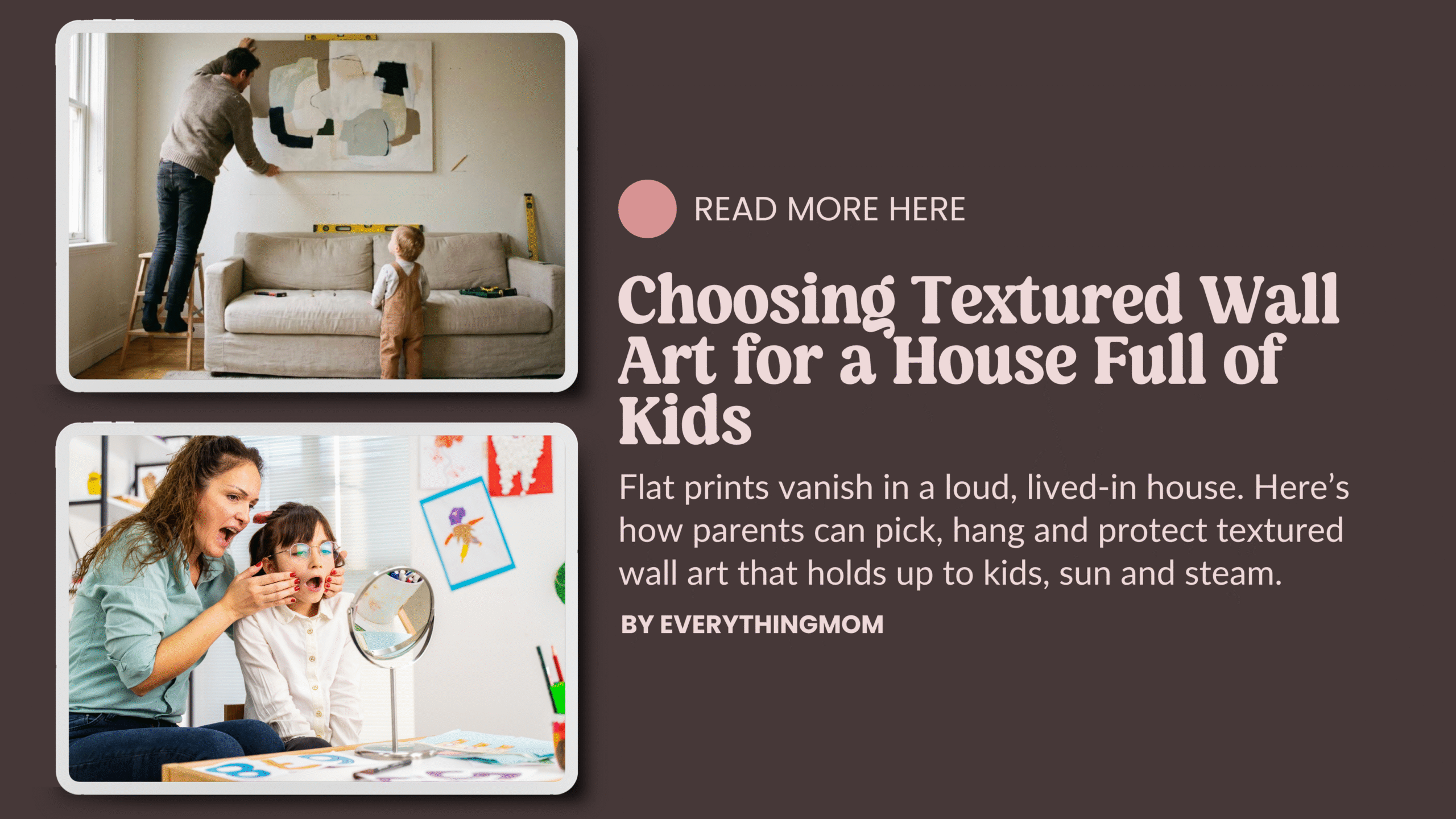
Size is the other decision. Measure the wall before you shop, and aim for a canvas that fills roughly two thirds of the width of the sofa below it. Anything much smaller looks like an afterthought. Anything much larger crowds the room.
You don’t need a huge piece, either. One substantial canvas usually looks better than a cluster of small frames, and it gives you a single thing to dust.
Hang It Where Small Hands Can’t Reach
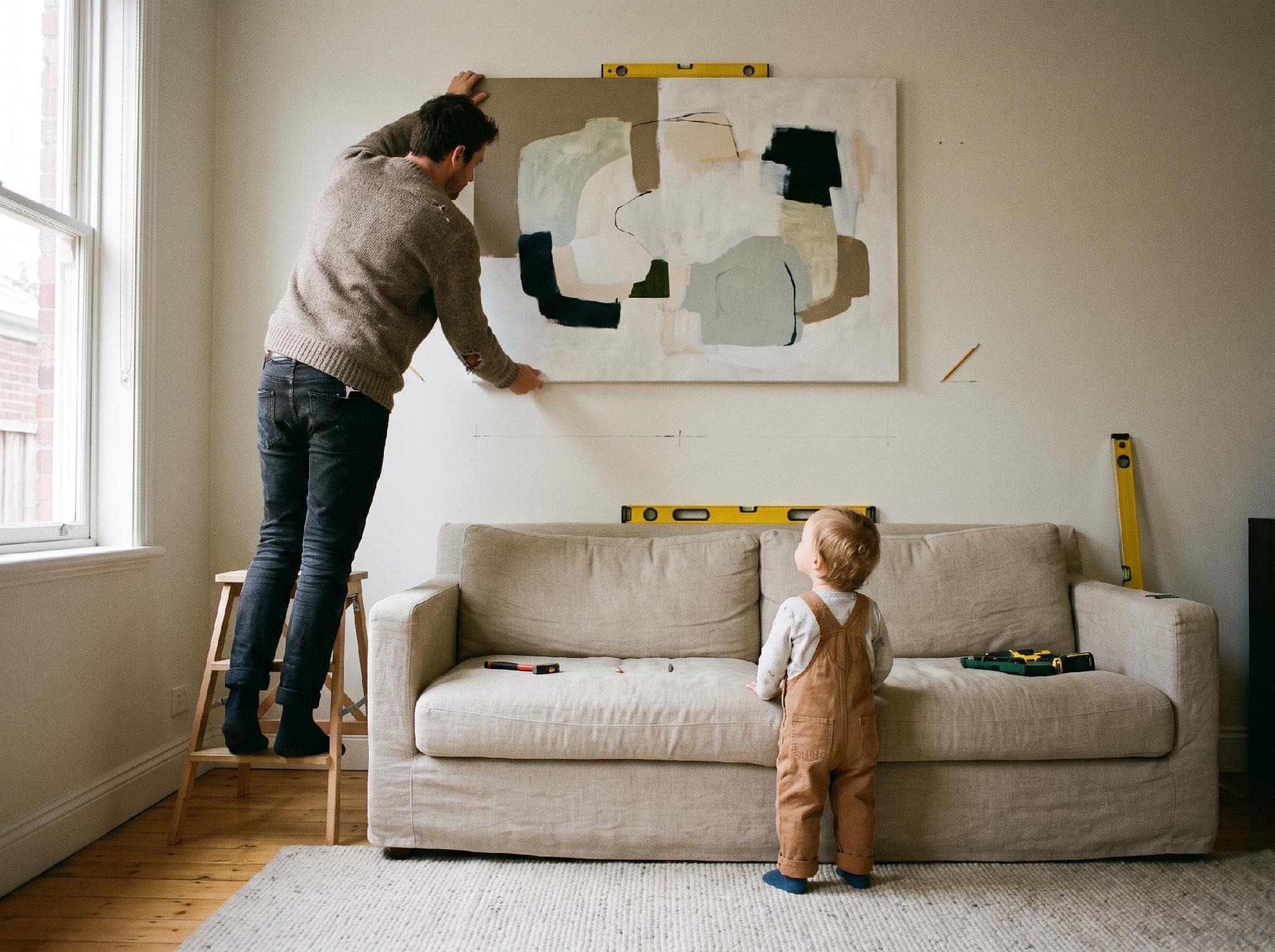
Raised paint is tempting. Kids will want to touch it, and a toddler’s idea of a gentle touch isn’t yours. So hang it higher than the usual eye-level rule, above the sofa back or over a console, where a child standing on a cushion still can’t get a fingernail into it.
Weight matters as much as height. Use proper wall anchors, not a single nail, and check the hardware once a season, especially if a door slams or a ball gets thrown in the room. If you’re already childproofing, add this to the list. We covered a similar safety habit in our piece on a baby-proofing step most parents skip, and the same mindset applies to anything heavy on a wall.
Ask someone taller to check the placement with you, and step back to see the wall from the sofa, not just from the ladder. It’s easier to move a hook than to patch a hole.
Keep the room’s traffic in mind too. A canvas beside a doorway will get bumped by backpacks. Over the middle of a long wall, it’s safer.
Let the Family Choose the Theme
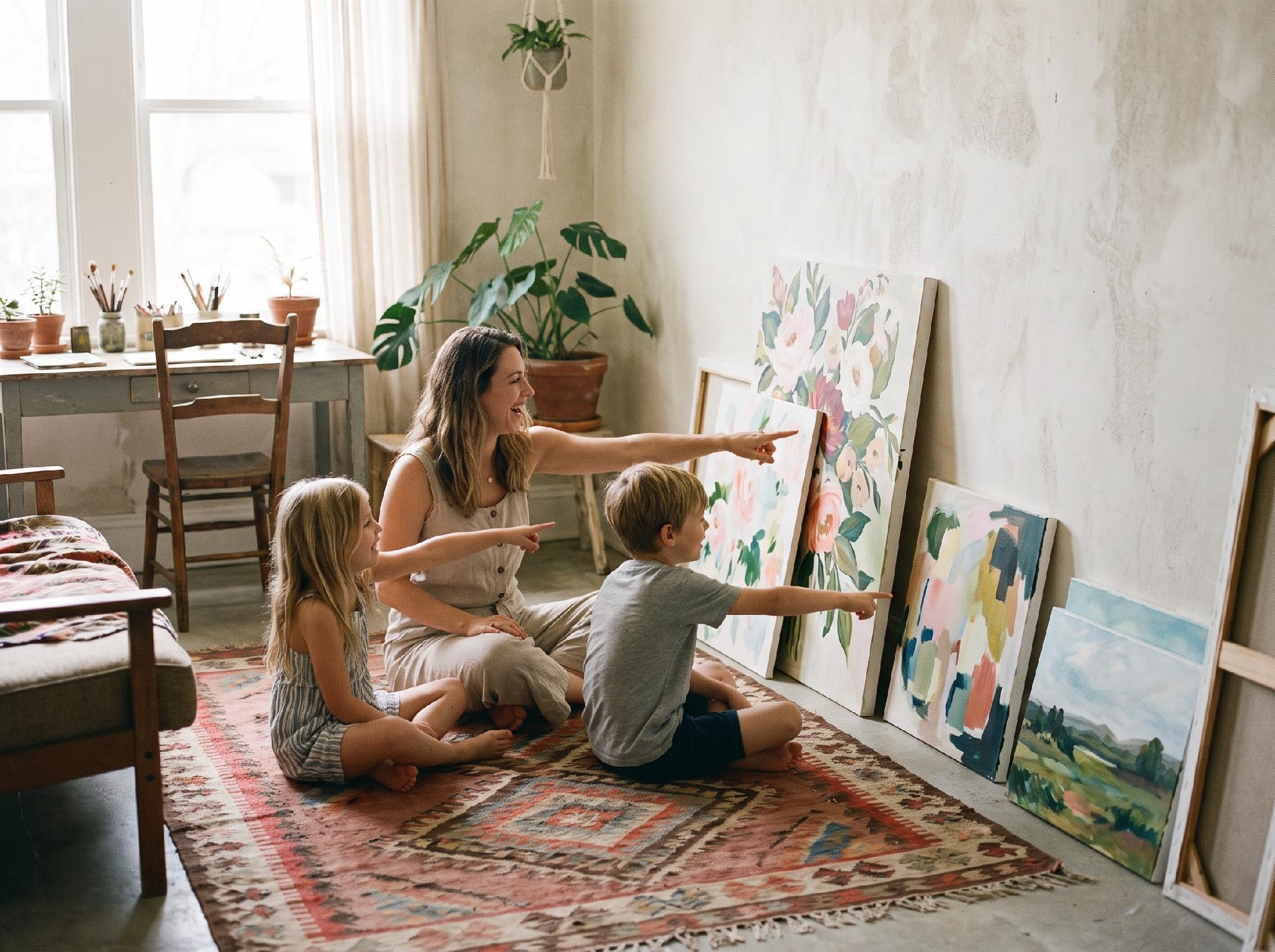
Kids care more about a room when they’ve had a say in it. You don’t have to hand over the decision, but you can narrow it to two or three options and let them vote. Colors that match their favorite things usually win: ocean blues, forest greens, bright yellows.
Families who share a passion can build the whole room around it. Our feature on a sports-loving family can decorate shows how a shared interest can drive a gallery wall. A single textured canvas can anchor that kind of space and give the memorabilia something calm to sit beside.
Let them tell you why they chose it, too. A six-year-old who says the blue one “looks like waves” has just practiced describing what she sees, and she’ll point it out to every visitor for months.
If your kids are very young, pick abstract pieces over scenes. An abstract canvas stays interesting as they grow, and it won’t look babyish at twelve.
Sun and Steam: The Quiet Damage
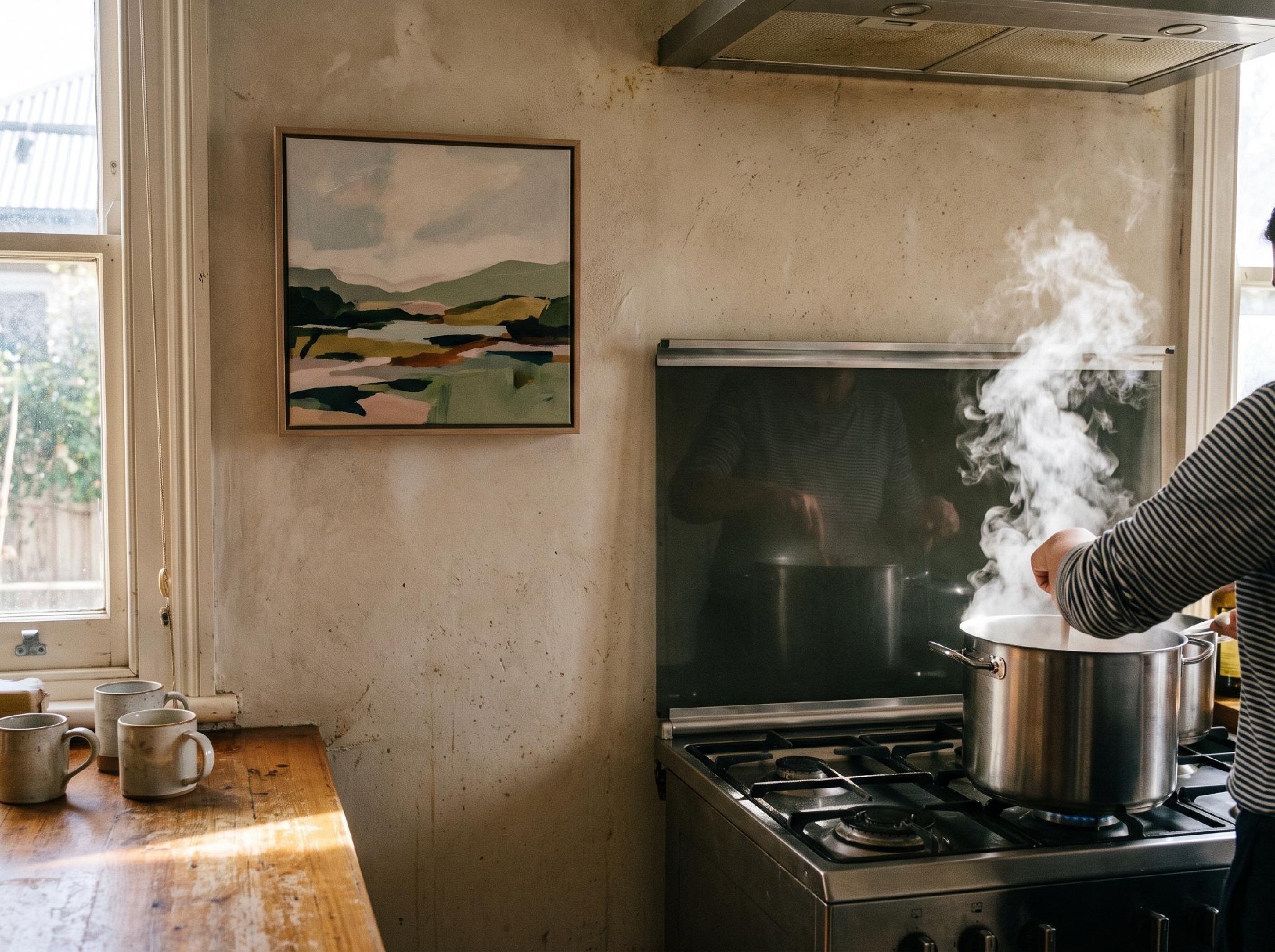
Kids aren’t the biggest threat to a canvas. The room itself is. According to the Canadian Conservation Institute’s guidance, paintings on canvas are safest at a stable relative humidity between 40 and 60%, and artworks become susceptible to fungal growth above 70 to 75%. The same note says light damage is cumulative and irreversible, so keeping light levels low and filtering UV radiation helps.
For a family home, that has simple consequences. Skip the bathroom. Keep art away from the stove and dishwasher steam. Don’t hang a favorite piece directly opposite a sunny window where it takes afternoon light for hours. Dust textured surfaces gently with a soft dry brush rather than a damp cloth, and avoid cleaning sprays near them. That last one is my own habit, not conservation advice, but it has never failed me.
Rotate It, and Enjoy It
Even well-placed art benefits from a change now and then. The Museum of Modern Art recommends periodically taking artwork down and replacing it with another piece to limit light exposure. In a family house, rotation has a second benefit: it keeps the room from becoming invisible. Move the canvas to a different wall after a year, choosing a spot away from direct sunlight, and everyone notices it again.
If you’re buying textured artwork online, check the dimensions, materials and estimated delivery time before ordering. Hand-painted pieces may take longer to prepare and ship, so plan ahead if you’re decorating for a birthday, a new baby or another family milestone. It’s also worth reviewing the return policy before making a purchase.
The wall in your living room is going to be there long after the block tower has been knocked down. It may as well have something good on it.