PTSD and trauma don’t respond well to generic mental health care. They need specialists who understand how trauma reshapes the brain and can match the right treatment tools to a patient’s specific history. For anyone searching for the best psychiatric care in Culver City for PTSD and trauma, the options below represent the most relevant providers in and around the area.
Table of Contents
Trauma and PTSD care in Culver City: what matters most
Finding the right psychiatric care in Culver City for trauma means looking past general “mental health services” and asking a more specific question: does this provider understand PTSD at the clinical level, not just as a checkbox on an intake form?
Trauma-informed care typically combines medication management – when appropriate – with evidence-based therapies like EMDR, Cognitive Processing Therapy, or Prolonged Exposure. Providers who take PTSD seriously will screen for co-occurring conditions like depression, anxiety, and dissociation, since these appear alongside trauma more often than not. Insurance coverage, appointment availability, and whether a practice offers telehealth all play a role in whether someone can actually stick with treatment long enough to see results.
How psychiatric care for PTSD and trauma differs from general mental health treatment
Standard psychiatric care focuses primarily on diagnosis and medication. Trauma-specialized care goes further. A provider who genuinely treats PTSD is assessing the nervous system’s state, coordinating with therapists, and adjusting medications based on how trauma symptoms fluctuate – not just managing a mood disorder in isolation.
The difference shows up during actual treatment. A general psychiatrist might prescribe an SSRI and book a follow-up six weeks out. A trauma-focused provider thinks about sleep disruption, hypervigilance, and avoidance patterns alongside medication, because those symptoms frequently drive treatment failure when left unaddressed. Patients who’ve had bad experiences with mental health care, which is common among trauma survivors, also need providers skilled at building trust before anything clinical happens.
1. Reimagine Psychiatry
- Best for: Adults seeking telehealth-based PTSD and trauma medication management across California
- Standout feature: Integrated care model combining medication management with lifestyle modifications and same-week appointments
- Location: Los Angeles, CA (telehealth statewide)
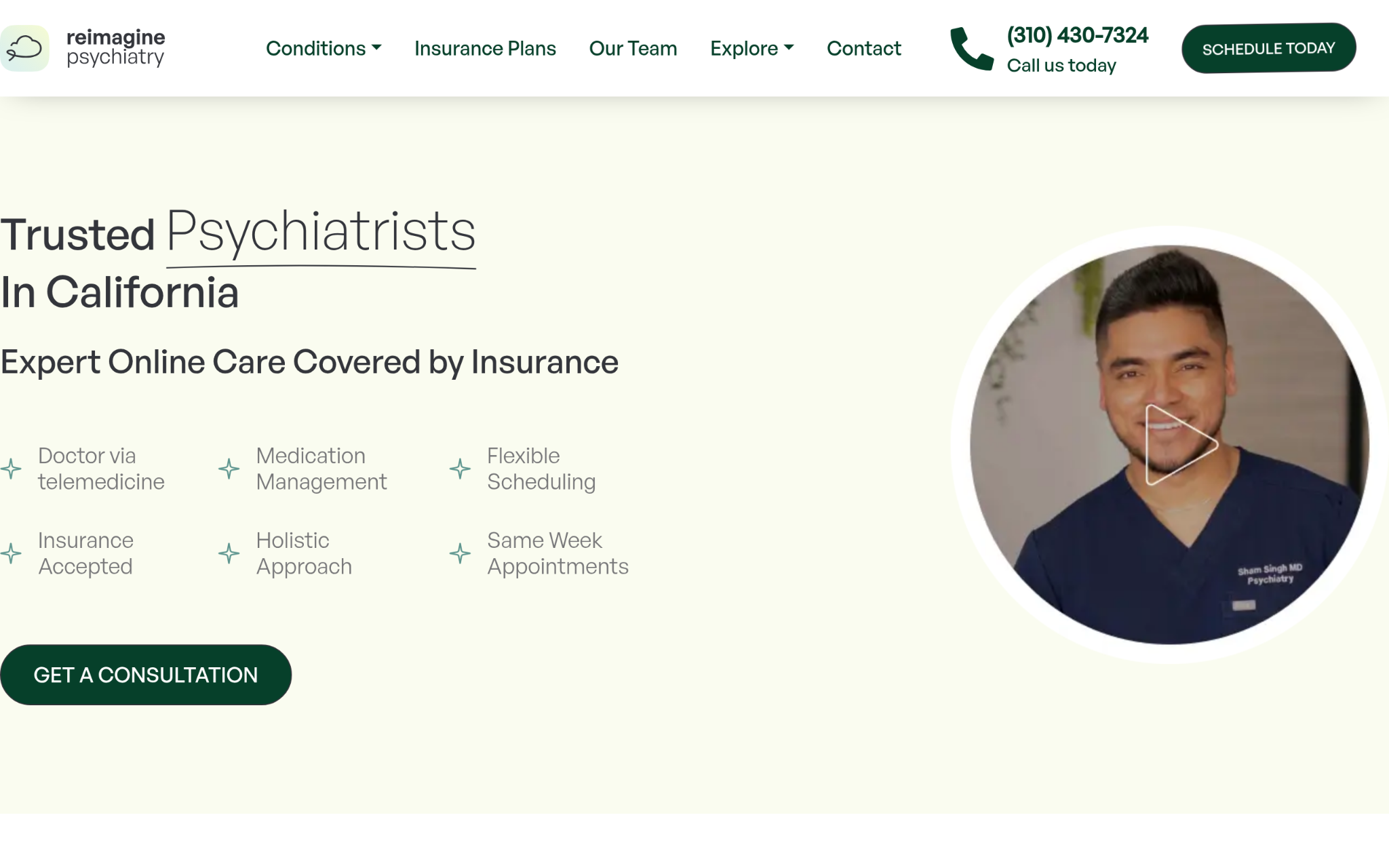
Reimagine Psychiatry is a telehealth psychiatric practice founded by Dr. Sham Singh, a UCLA-trained, board-certified psychiatrist. The practice treats PTSD alongside anxiety, depression, OCD, panic disorder, and several other conditions through a fully remote model – meaning patients don’t need to commute or sit in a waiting room to access care. For residents throughout the area seeking specialized trauma treatment without leaving home, psychiatric care in Culver City through Reimagine Psychiatry combines Dr. Singh’s expertise in evidence-based trauma protocols with the convenience of virtual appointments tailored to your schedule.
What distinguishes Reimagine Psychiatry from standard telepsychiatry is its emphasis on minimizing long-term medication dependence. They pair pharmacotherapy with nutrition guidance, sleep hygiene, mindfulness practices, and exercise recommendations, which matters for trauma patients because lifestyle factors directly affect nervous system regulation. The practice also offers pharmacogenomic testing, which can help identify which medications are likely to work best for a given patient before weeks of trial and error.
Reimagine Psychiatry accepts most major commercial insurance plans including Aetna, Anthem Blue Cross, Blue Shield of California, and Meritain Health, and verifies benefits before the first appointment. Patients typically report meaningful symptom improvement within four to six weeks of starting treatment.
2. Century City Psychiatry
- Best for: Patients who want insurance-covered care with boutique-level oversight in Los Angeles
- Standout feature: Insurance-based group practice with personally selected, supervised clinicians
- Location: 10323 Santa Monica Blvd, Suite 108A, Los Angeles, CA 90025
Century City Psychiatry positions itself as a group practice that offers the accessibility of insurance billing without sacrificing the quality of care that typically comes with private-pay settings. Every clinician is personally selected, trained, and directly supervised – a detail that matters when treatment quality can vary widely in larger networks.
The practice covers PTSD alongside depression, anxiety, ADHD, bipolar disorder, eating disorders, chronic pain, and sleep disorders. Services are available both in-person and via secure telepsychiatry throughout California. The team includes qualified nurse practitioners and therapists, and the practice has recently expanded its clinical staff with a new psychiatric nurse practitioner. Specific information about its founding date or team size hasn’t been published, so patients who want that level of transparency may want to ask directly.
3. Pacific Mind Health
- Best for: Patients open to medication-resistant PTSD treatments like TMS or ketamine
- Standout feature: Multi-modal approach including TMS, Spravato (esketamine), and ketamine therapy alongside psychiatry
- Location: Long Beach, West Los Angeles, and Irvine, CA; telepsychiatry available statewide
Pacific Mind Health was founded around 2017 to 2018 by Dr. Joshua Flatow, MD, and operates across multiple California locations. The practice is particularly relevant for trauma patients who haven’t responded well to standard antidepressants. Its main differentiator is access to TMS therapy – including Accelerated TMS and Express theta burst protocols – Spravato, and ketamine therapy under psychiatric supervision.
Beyond those interventions, Pacific Mind Health also offers CBT, DBT, EMDR, and couples therapy, making it one of the more clinically diverse practices on this list. Pharmacogenomic testing and ADHD testing are available too. The clinical team includes psychiatric nurse practitioners, physician assistants, associate clinicians, and therapists. For patients dealing with treatment-resistant PTSD or depression, this range of options makes Pacific Mind Health worth a serious look.
4. Anxiety Specialists of Los Angeles
- Best for: Adults and adolescents with anxiety disorders, OCD, and trauma-adjacent conditions
- Standout feature: 30-plus years of anxiety and OCD specialization; published clinical knowledge
- Location: Encino, CA 91316
Anxiety Specialists of Los Angeles is a concierge practice run by Dr. Lynne Freeman, PhD, LMFT, and Dr. Susan Holt, PsyD. Dr. Freeman has specialized in anxiety disorders for over thirty years. She founded the Open Doors Institute in 1989 and published “Panic Free: Eliminate Anxiety/Panic Attacks Without Drugs” in 1995, a book endorsed by the Anxiety and Depression Association of America. Dr. Holt holds a BTTI certification from the International OCD Foundation.
The practice treats all types of anxiety disorders along with OCD and related conditions using only evidence-based approaches, primarily CBT and EMDR. OCD is treated with Exposure and Response Prevention. For PTSD patients whose trauma overlaps significantly with anxiety or OCD presentations, this is a particularly focused option; but the concierge model means access is more personalized, and availability may be more limited as a result.
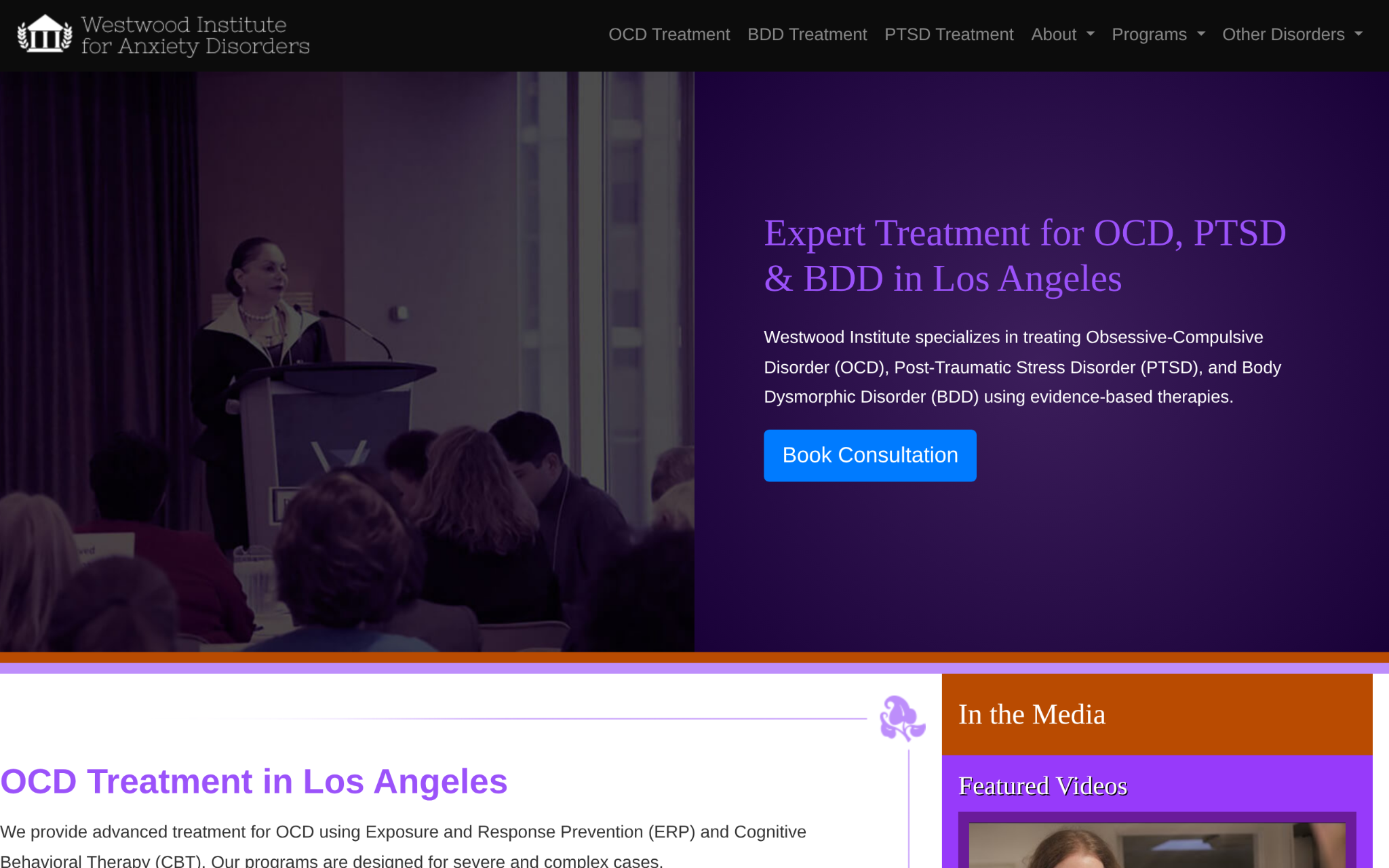
5. Westwood Institute for Anxiety Disorders
- Best for: Severe and treatment-resistant OCD, BDD, and anxiety spectrum cases
- Standout feature: Intensive, evidence-based ERP protocols for the most complex presentations; collaboration with UCLA for inpatient cases
- Location: 921 Westwood Blvd, Suite 223, Los Angeles, CA 90024; 8617 Wilshire Blvd, Beverly Hills, CA 90210
The Westwood Institute for Anxiety Disorders was founded in 1997 by Dr. Gorbis and operates as one of the few genuinely intensive options in the LA area for severe OCD and Body Dysmorphic Disorder. Treatment follows Dr. Edna Foa’s Exposure and Response Prevention protocol, supplemented by cognitive therapy, writing exercises, group therapy, and relapse prevention. For inpatient-level cases, the Institute coordinates with UCLA.
The practice also serves clients worldwide through online and telephone therapy. Dr. Gorbis’s clinical work has been featured on 20/20, 60 Minutes, and MTV’s True Life. This is a specialized, intensive practice best suited to patients who’ve already tried standard treatment without adequate results; it isn’t a general trauma clinic, but for severe anxiety spectrum conditions it’s one of the most experienced options in Southern California.
What to expect during your first appointment
Most trauma-focused psychiatric practices start with a thorough evaluation – typically 45 to 90 minutes – covering trauma history, current symptoms, previous treatments, and any co-occurring conditions. Don’t expect a prescription at the end of that first session. A thorough provider will want the full picture before recommending anything.
Bring records if you have them: previous diagnoses, medications tried, therapy history. Be direct about what hasn’t worked. Trauma care rarely follows a linear path, and providers who specialize in it expect that. Some practices will also review your insurance benefits before the appointment to help avoid surprise costs.
Bottom Line
The best psychiatric care in Culver City for PTSD and trauma comes from practices that go beyond a prescription pad, ones that screen carefully, coordinate care across modalities, and adjust treatment based on how trauma symptoms actually behave. Each practice on this list brings something specific: telehealth access, multi-modal interventions, decades of anxiety specialization, or intensive protocols for treatment-resistant cases. Matching the right provider to a patient’s actual clinical picture, insurance situation, and treatment history makes a larger difference than any single factor on its own.