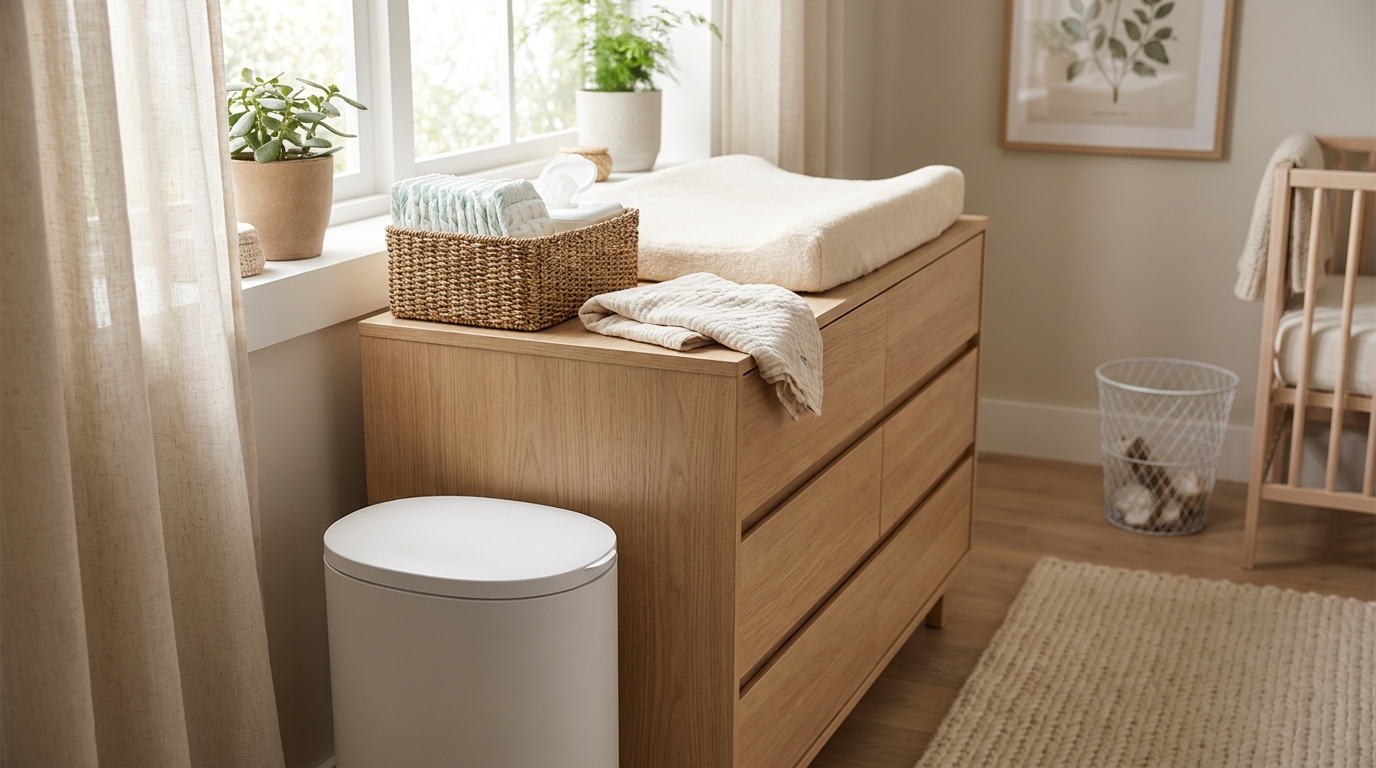
Every newborn goes through a surprising number of diapers each day, and every one of them has to go somewhere. New parents quickly discover that a regular bin in the nursery starts to smell within hours. That’s why so many families ask whether a diaper pail is really worth the space. This guide covers what a diaper pail does, whether you actually need one, how it compares to a regular trash can, and how to choose and use the right one.
Table of Contents
What Is a Diaper Pail and How Does It Work?
A diaper pail is a dedicated bin built to hold used diapers and keep their odor from spreading through the room. Instead of letting smells escape every time you toss a diaper, it traps them inside with a tight lid and an odor-locking design. The result is a nursery that stays fresh even after a long day of changes.
Odor is the main reason parents look for something better than a standard bin. Brands like Diaper Genie make a dedicated diaper trash can built specifically to lock diaper odors inside rather than let them drift into the room. That focus on odor control is what keeps the nursery comfortable between changes.
How Is a Diaper Pail Different From a Regular Trash Can?
A regular trash can holds waste, but it does nothing to stop odor from escaping when you lift the lid. A diaper pail is designed around that exact problem. Its lid and odor-locking mechanism keep smells contained, so the room doesn’t fill with odor every time you add a diaper. You also empty it far less often, since it’s made to hold many diapers at once.
What Makes the Odor-Locking Work?
Odor-locking comes from a combination of a snug lid and a design that keeps air from moving freely in and out. Many diaper pails use refill bags that add another layer of odor control. Together, these features hold smells inside the pail instead of releasing them into the nursery. That’s the core job a diaper pail is built to do.
Do You Really Need a Diaper Pail?
Whether you need a diaper pail depends on how you handle diaper changes and where you do them. For most families, the decision comes down to convenience and odor control. If you change diapers in a bedroom or nursery, a dedicated pail usually earns its place quickly.
What Problems Does a Diaper Pail Solve?
A diaper pail solves the two biggest frustrations of diaper disposal: lingering odor and constant trips to the outdoor trash. It keeps used diapers contained in one clean spot until you’re ready to empty it. It also reduces how often you interrupt a nap or a change to run to the garbage. For tired parents, that convenience adds up fast.
Who Benefits Most From a Diaper Pail?
Parents of newborns benefit most, since a newborn can go through a dozen or more diapers a day. Families where the outdoor bin is far from the nursery also gain a lot from keeping odor contained indoors. Anyone who changes diapers in a shared living space will appreciate a pail that keeps the room fresh. The heavier your daily diaper count, the more a pail pays off.
Diaper Pail vs Regular Trash Can: Which One Fits Your Nursery?
Choosing between a diaper pail and a regular trash can comes down to how much odor control you want and how much effort you’re willing to spend. Both hold diapers, but they handle smell very differently. Here’s how they compare where it matters.
Where Does a Regular Trash Can Fall Short?
A regular trash can releases odor every time the lid opens, and diapers left inside can make a whole room smell within hours. It usually holds fewer diapers, so it fills up fast and needs frequent emptying. It also offers no real barrier against the strong smells that come with used diapers. In a nursery, those shortfalls become obvious quickly.
What Do You Gain by Switching to a Diaper Pail?
Switching to a diaper pail gives you steady odor control and fewer trips to the outdoor bin. You can drop a diaper in and walk away without the room filling with smell. Most pails hold many diapers before they need emptying, which saves time during busy days. You gain a calmer, fresher nursery with less daily effort.
How Do You Choose the Right Diaper Pail?
The right diaper pail matches your daily diaper count, your budget, and how much odor control you want. A few key features separate a pail you’ll love from one you’ll replace. Focus on these before you decide.
Which Features Matter Most?
A handful of features do most of the work in a good diaper pail:
- Odor-locking lid: keeps smells inside every time you open and close it.
- Capacity: a larger pail holds more diapers and needs emptying less often.
- Hands-free operation: a foot pedal or push-flap lets you drop a diaper without using your hands.
- Easy emptying: a wide opening and simple bag removal make cleanup quick.
Matching these features to your routine is the fastest way to pick the right pail.
What Should You Know About Refills?
Many diaper pails use refill bags designed to boost odor control, so it helps to know the ongoing cost before you settle on a model. Some pails use proprietary refills, while others work with standard bags. Check how many diapers each refill holds and how often you’ll need to replace it. Factoring in refills gives you a clear picture of the real long-term cost.
How Do You Get the Most Out of a Diaper Pail?
A diaper pail works best when it’s placed well and emptied on a sensible schedule. Small habits make a big difference in how fresh your nursery stays. These tips help you get the full benefit.
Where Should You Place It in the Nursery?
Place the diaper pail within arm’s reach of the changing table so you never have to step away mid-change. Keep it off to the side but close enough to use one-handed while you hold the baby. Avoid tucking it into a closed closet, where trapped air can concentrate odor. A spot near the changing station keeps the routine smooth and the room fresh.
How Often Should You Empty It?
How often you empty a diaper pail depends on its capacity and how many diapers you add each day. Most families empty it every few days, though the newborn stage may call for more frequent changes. Emptying before the pail is completely full keeps odor control at its best. A regular rhythm prevents smells from building up.
What to Weigh Before Bringing Home a Diaper Pail
A diaper pail isn’t strictly required, but it solves real, daily problems for most families with young children. If you value a fresh nursery and fewer trips to the trash, a dedicated pail is an easy win. Weigh your diaper count, your space, and the ongoing cost of refills against the comfort it brings. For most new parents, that trade lands firmly in favor of a pail.
Frequently Asked Questions About Diaper Pails
Is a Diaper Pail Worth It for a Newborn?
Yes, a diaper pail is especially worth it during the newborn stage, when diaper changes happen around the clock. It keeps odor contained and cuts down on constant trips to the outdoor bin. Many parents find it one of the most useful items in the nursery.
Can You Use a Diaper Pail Without Special Refills?
Some diaper pails work with standard bags, while others are designed for proprietary refills that add extra odor control. Using the recommended refill usually gives you the best results. Check your specific model to see what it supports before switching to standard bags.
How Long Can Diapers Stay in a Diaper Pail?
Diapers can stay in a pail for a few days thanks to its odor-locking design, though emptying it regularly keeps things fresh. The exact timing depends on capacity and how many diapers you add each day. When in doubt, empty it before it reaches the top.
Do Diaper Pails Actually Control Odors?
Yes, a well-designed diaper pail controls odors far better than a regular trash can. Its lid and odor-locking features hold smells inside instead of letting them escape into the room. Pairing it with the right refill helps control odors even further.

- Where to Find the Best Laser Hair Removal Treatment for Your Skin and Hair Type in Toronto?
- 10 Simple Interior Upgrades That Make Your Home Look More Expensive
- 5 Ways You Can Get Snippets of Your Time To Yourself as a Parent
- 5 Best Nursing Home Abuse Lawyers to Stand Up for Grandma and Grandpa
- Do You Need a Diaper Pail? What Every New Parent Should Know