The best baby bottle warmer for a 3 AM feed is not always the one with the longest feature list. At that hour, the useful model is the one you can start while the baby is still only stirring. The bottle is nearby, the room stays dim, and the heat time for a 120 ml feed is realistic rather than guessed. This guide looks at speed, dark room controls, keep-warm planning, noise, and bedside fit.
General information only, not medical advice.
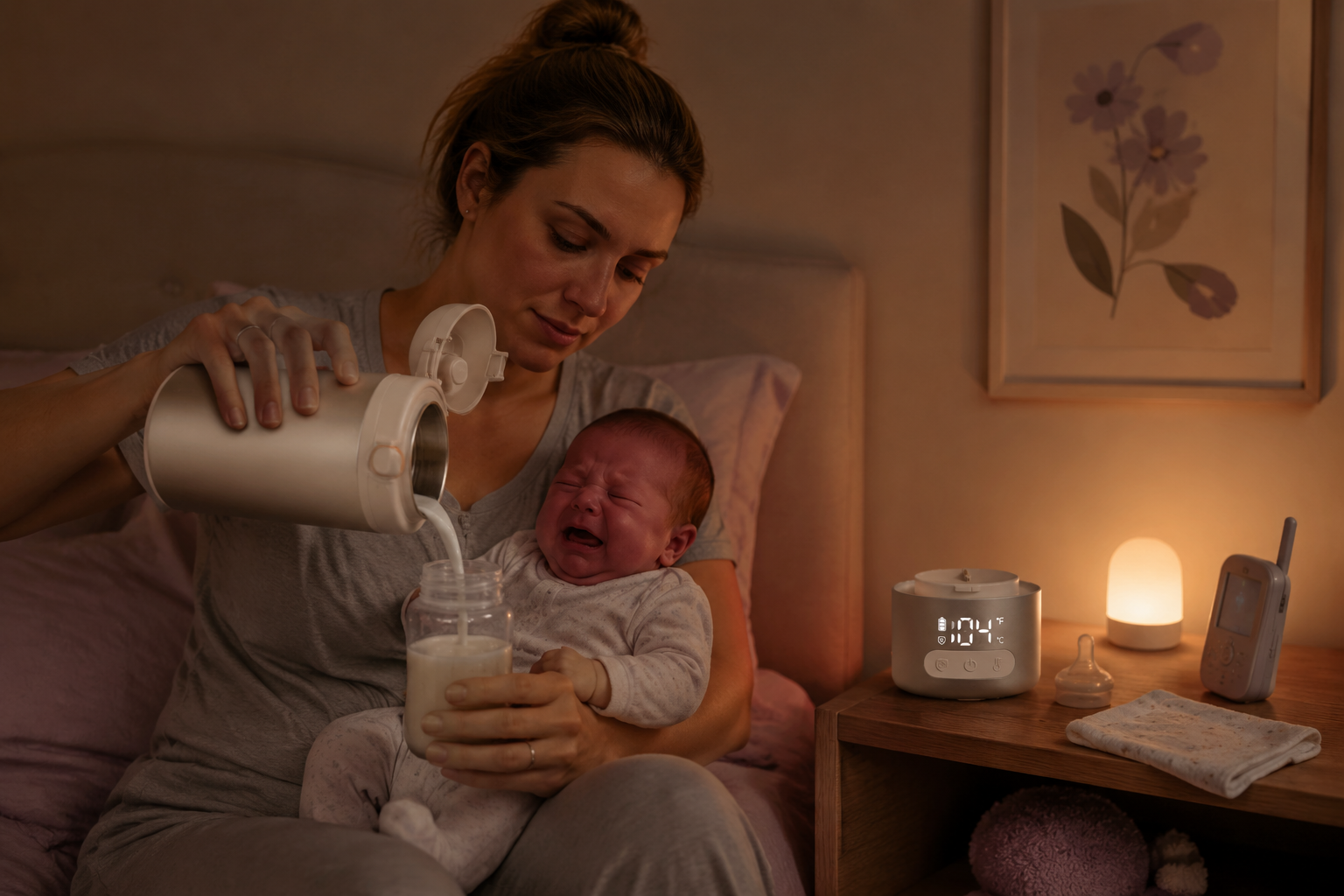
Table of Contents
Build the two-minute night feed flow before bed
A quiet night feed usually starts before the warmer turns on. If the bottle is still in the back of the fridge and the nipple is in a drawer, the first minute is already gone. The warmer helps, but it cannot fix a messy setup by itself. The best baby bottle warmer for night feeds is the one that fits the routine you can repeat when you are tired.
The two-minute flow is easier to picture as a short handoff.
- Before sleep. The clean bottle, nipple, burp cloth, and warmer sit in one easy-reach spot.
- When the baby stirs. Start the warmer or use prewarmed water while the room is still quiet.
- Around one minute. Check progress without turning the room into daylight.
- Around two minutes. Feed if the bottle is ready. If it started fridge-cold, keep the baby settled while it finishes.
That last step is where many night routines break. Two minutes is a target for the handoff, not a promise that every fridge-cold bottle reaches body temperature that fast. It works better when warm water is mixed with formula after the baby wakes, or when the bottle is not starting from a full refrigerator chill. For expressed breast milk, shortcuts can backfire. The CDC advises against microwaving breast milk or infant formula because hot spots can burn a baby’s mouth, so a warmer or warm water bath is the safer route, even when the clock feels loud.
Use the 120 ml heating benchmark to judge speed
Speed claims get slippery unless they match the bottle on your nightstand. A fast baby bottle warmer may have been tested with water, a smaller amount, or liquid that was not fridge-cold. For the 3 AM feeding, the question is narrower. How long does 120 ml or 4 oz take from refrigerator temperature to a feed your baby will accept?
Use the benchmark as a reality check for your current model.
| Starting point | What the warmer must do | Night feed expectation |
| Warm water for formula | Hold or heat water near feeding temperature | A two-minute routine may be realistic |
| Room temperature milk | Lift temperature gently without overheating | Usually easier to work into a quiet night feed |
| Fridge-cold 120 ml milk | Move from about 40°F toward feeding temperature | Expect roughly three to four minutes on a fast model |
| Larger bottle | Heat more liquid evenly | Add time and check for uneven warmth |
A more useful benchmark separates water timing from milk timing, especially around a common 120 ml bottle size. Warm water is the easier path for a true two-minute routine, while chilled breast milk usually needs the extra minute or two. If the timing is
only described as fast, the warmer may be fine in the daytime but less predictable during a quiet night feed.
Choose controls that work in the dark
The right bottle warmer for night feeds should be easy to operate by touch. A bright touchscreen can look modern, but it may be the wrong interface for a dark bedroom. Parents often need one hand for the baby and one hand for the bottle, with no interest in unlocking a menu or reading tiny icons.
Physical controls have a few night advantages when you need one-handed operation.
- A dial gives position memory, so you can feel whether it is on the usual setting.
- A raised button is easier to find than a flat screen when the room is dark.
- A click or stop point reduces guessing without needing a bright display.
- Fewer setting layers reduce mistakes when the adult is half awake.
A touchscreen can still work for night feeds if the screen is dim, the main setting is saved, and the start action is simple. The problem is a warmer that asks for bottle type, volume, temperature, mode, and confirmation every time. That may be acceptable at noon. At 3 AM, it adds light, delay, and frustration.
Before deciding whether you bought the right model, test it without turning on the lights. If you cannot start the normal night setting in one or two actions, the warmer may be better for the kitchen than the bedroom. If you are comparing baby gear during a prime day sale, this dark-room test is more useful than choosing by the brightest display or longest feature list.
Check keep warm and noise before buying
Automatic keep warm and timed preheat can make night feeding smoother, but only when they are used for the right liquid and the right length of time. A keep-warm mode is most helpful for water that will be mixed with formula after the baby wakes. It is more complicated for prepared formula or expressed milk, because warm holding can raise food safety concerns if it goes too long.
Use this feature check before trusting a warmer overnight.
- Keep-warm range. Can it hold water near the temperature your baby accepts?
- Timer or preheat. Can it start before the usual wake window, or do you still need to press start manually?
- Auto shutoff. Does it stop before overheating or running dry?
- Temperature memory. Does it remember the last setting, or reset every time?
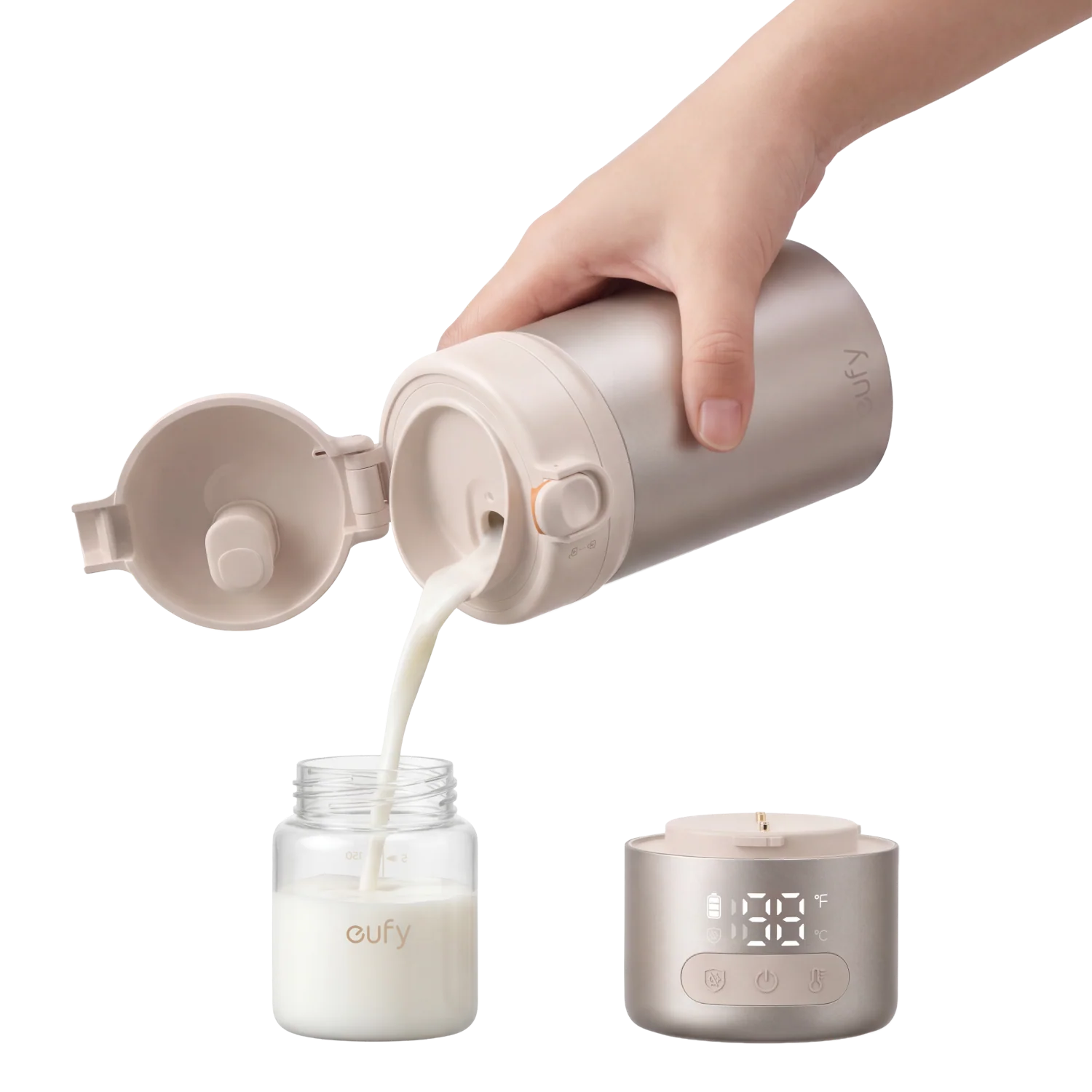
The eufy Portable Milk Warmer E10 is easier to judge against this checklist because the timing details are specific. It warms 4 oz of milk in 3.5 minutes and water in 2 minutes, which helps parents separate a quick water-based formula routine from a slightly longer chilled-milk routine. Four settings at 98°F, 104°F, 110°F, and 122°F give room for different feeding preferences without guessing with hot tap water in the dark, and it can heat while plugged in.
Noise deserves the same inspection. A warmer can be technically quiet but still wake a baby if it has a sharp beep, a loud button, or a lid that snaps in a quiet room. Check the whole sound profile, not just the motor or heating element.
A useful test is simple. Run the warmer in the actual room during nap time or before bedtime. Listen for the start sound, water movement, completion alert, and bottle handling noise. If the alert makes you flinch, it may not belong next to a crib. Move it farther away, choose a silent mode if available, or keep it on the adult side of the room.
Match desktop or portable warmers to the bedside
Desktop and portable warmers solve different nighttime problems. A desktop warmer can be stable if you have a clear counter, a nearby outlet, and enough space away from the crib. A portable warmer is useful when the feed happens beside the bed, in a nursery chair, or away from the kitchen.
| Choice | Better fit | Possible problem |
| Desktop warmer | Larger nightstand, fixed outlet, repeated home use | Takes more space and may bring brighter displays |
| Portable warmer | Small nightstand, shared bedroom, travel, fewer kitchen trips | Needs charging and may have smaller capacity |
| Warm water bowl | Backup plan, silent use, no electronics | Slower and less precise from fridge-cold |
Space is not a small detail. A nightstand already holds a phone, a water cup, a lamp, a monitor, a burp cloth, and sometimes medication. If the warmer crowds the surface, you are more likely to knock something over. Power also matters. A desktop model may be useless if the only outlet is behind the bed. A portable model may be frustrating if it is never charged.
For parents building a broader feeding setup, separate the jobs. A warmer prepares the bottle. Other tools may handle washing, cooling, monitoring, or pumping. Judge the warmer on the night feed tasks that matter at the bedside, including speed, controls, sound, footprint, and power.
Conclusion
A 3 AM bottle warmer earns its place in a small, ordinary way. It starts without much light, gives you a realistic idea of how long 120 ml takes from the fridge, and does not announce itself with a sharp alert when the baby is almost settled. If your current model needs too many taps, takes longer than your baby can tolerate, or does not sit safely near the feeding chair, it may be a daytime warmer rather than a night-feed warmer. For a wider look at feeding and baby care gear around this routine, browse the eufy Baby collection.