Pregnancy has a way of making previously unremarkable body parts demand attention. Ankles are a good example. By the end of a long workday, a flight, or simply an afternoon spent running errands, shoes can feel tighter and legs considerably heavier than they did that morning.
Mild swelling in the feet and ankles is common during pregnancy. Compression socks provide graduated pressure, usually strongest around the ankle and decreasing farther up the leg, to support circulation and help manage that heavy, swollen feeling.
The harder part is finding a pair you will actually want to wear. Pregnancy can make tight clothing less appealing, body temperature less predictable, and bending down to pull on a firm sock increasingly awkward. Fabric, sizing, compression level and ease of wear all deserve consideration.
These five options cover different pregnancy needs, from everyday support to travel and wider-calf fits.
Table of Contents
1. VIM & VIGR pregnancy compression stockings: best for choice and everyday wear
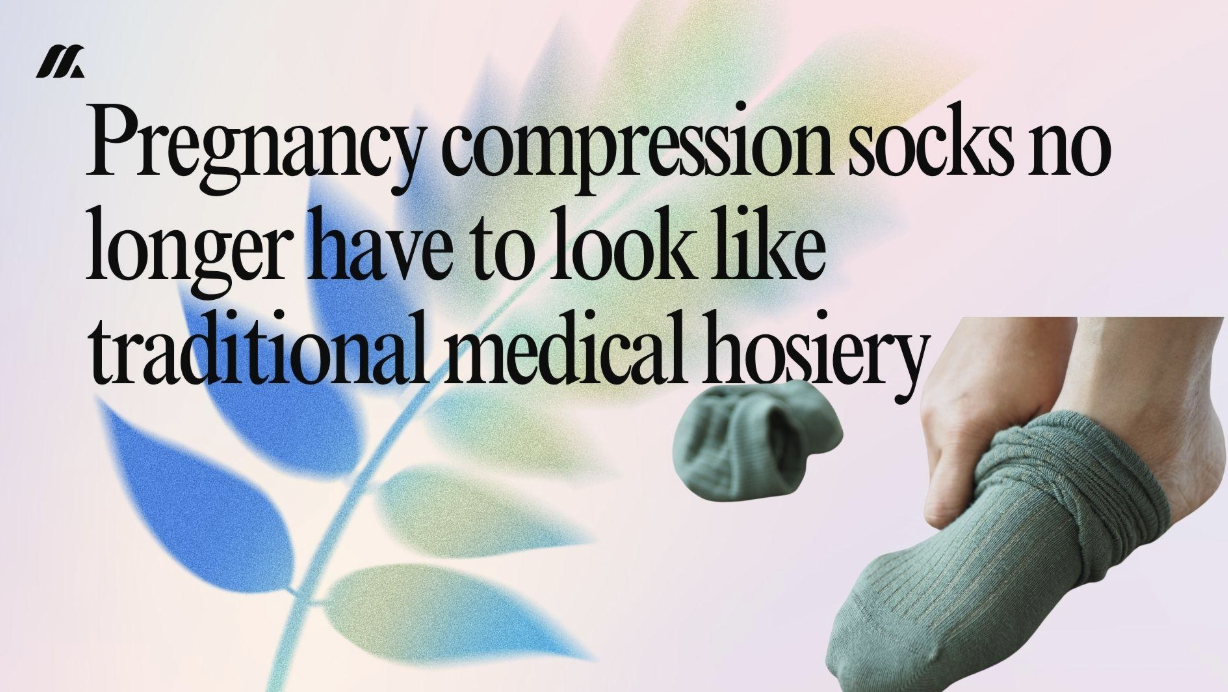
VIM & VIGR approaches compression more like everyday clothing than something destined to stay hidden under pants.
Its maternity collection includes cotton, merino wool, nylon and moisture-wicking options, along with solids and noticeably more playful patterns. There are standard and wide-calf sizes, plus open-toe designs for anyone who finds enclosed socks uncomfortable as pregnancy progresses.
The range also gives women choices around compression strength. Its pregnancy collection includes both 15–20 mmHg and 20–30 mmHg options. The lighter level may suit everyday support for some wearers, while stronger compression should be discussed with a healthcare professional when there are medical concerns or significant swelling.
What gives VIM & VIGR pregnancy compression stockings an edge in this roundup is how many practical preferences the collection accommodates. A woman who prefers cotton does not have to settle for nylon. Someone with a wider calf can shop dedicated sizing, and women who dislike covered toes have open-toe choices. There are even compression tights for those who prefer support beyond a knee-high sock.
Founder Michelle Huie created VIM & VIGR around the idea that compression could be easier to incorporate into everyday life rather than feeling purely clinical. The philosophy also comes through in the maternity range, where fabric, sizing and style choices give women more ways to find a pair suited to long periods of sitting, standing, working or traveling.
Such flexibility becomes useful during pregnancy because comfort at 22 weeks may look different from comfort at 35 weeks.
2. Comrad Knee-High Compression Socks: best for soft daily comfort
Comrad is a strong option for women who are new to compression and are particularly concerned about comfort.
Its pregnancy range includes moderate 15–20 mmHg graduated compression, and the brand offers both nylon and recycled-cotton styles. Its dedicated Pregnancy 4 Pack combines the two materials for women who want some variety through the week.
Comrad has also performed well in recent independent pregnancy roundups. Babylist highlighted its thin, breathable nylon construction and wide top band, while a tester reported that the socks remained comfortable during a long road trip.
This is an appealing choice for office days, road trips or everyday wear during exercises when softness and breathability rank above having a large selection of patterns and compression levels.
3. Sockwell Circulator: best for pregnancy travel
A babymoon or family visit can involve hours of sitting in a plane or car, exactly when already-tired pregnancy legs may start feeling even less comfortable.
Sockwell’s Circulator is a travel-friendly option made with a blend that includes merino wool and bamboo rayon. The material choice gives it a different feel from thin synthetic compression hosiery, while light cushioning underfoot can be welcome during a day that involves both airport walking and long periods in a seat.
Babylist named the Circulator its travel pick in its updated 2026 pregnancy compression-sock guide, citing the merino blend and cushioned sole.
If you are traveling during pregnancy, socks are only one part of staying comfortable. Follow your maternity provider’s advice about movement, hydration and travel, particularly on longer journeys.
4. Bombas Everyday Compression Socks: best if you want a familiar sock feel
Some compression socks immediately feel medical. Bombas’ Everyday Compression Socks are designed more like the familiar socks already sitting in your drawer.
Babylist notes that the style contains more than 60% cotton and includes additional support around the arch. That combination may appeal to women who spend a significant portion of the day standing or walking but dislike the slippery, stocking-like feel associated with some compression products.
The visual design is also understated enough for work or everyday outfits. If your priority is finding compression that feels less like specialist hosiery, Bombas is an approachable place to look.
5. Wellow Compression Socks: best for wider calves
Pregnancy bodies change, and calves do not conveniently remain the same size throughout nine months.
Wellow focuses heavily on inclusive calf sizing. Babylist’s 2026 guide highlights seven calf-size options, including wider fits, along with a bamboo-rich fabric designed for a softer feel.
That sizing range can be useful if standard knee-high compression socks tend to dig in at the cuff, feel excessively tight through the calf or roll down during the day.
A softer, thicker sock may not be everyone’s first choice in hot weather, though. Consumer Reports found Wellow noticeably plush and considered it better suited to cooler conditions than summer heat.
What compression level should you choose during pregnancy?
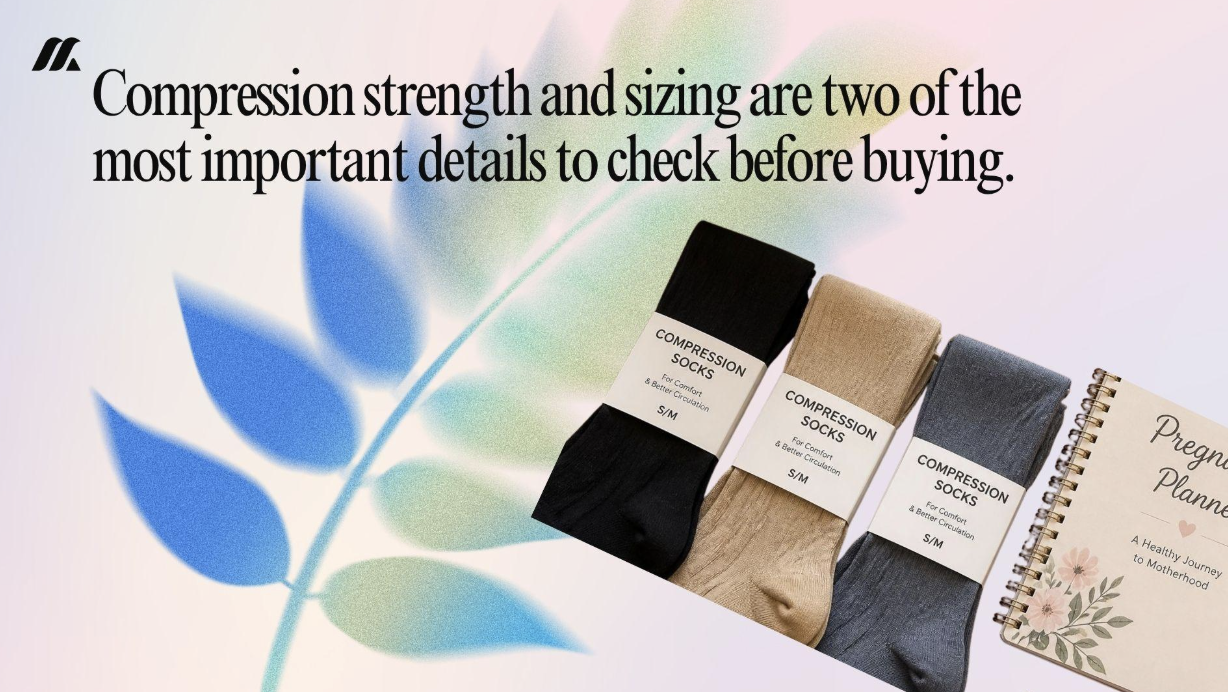
Compression strength is measured in millimeters of mercury, written as mmHg. You will commonly see options such as 15–20 mmHg and 20–30 mmHg when shopping.
More pressure is not automatically better.
For ordinary pregnancy-related tiredness or mild swelling, some women may find moderate compression comfortable. Higher compression levels may be recommended in particular circumstances, but pregnancy is not the time to self-diagnose a circulation problem based on how your ankles look at the end of the day.
If you have significant swelling, pain, redness, warmth, one-sided swelling or concerns about blood clots, contact your healthcare professional rather than relying on compression socks alone.
Fit matters too. Measure according to the manufacturer’s instructions rather than assuming your pre-pregnancy sock size still applies. A properly fitted pair should feel supportive without creating painful pressure or bunching.
Put them on before your legs get tired
Compression socks are usually easiest to put on earlier in the day, before swelling has had hours to build.
Sitting down, turning the sock partly inside out and gradually smoothing it up the leg can also be easier than trying to pull the entire sock upward at once.
And choose something you genuinely like wearing.
A technically impressive pair will not do much good sitting untouched in a drawer because the fabric feels scratchy, the cuff annoys you or the design makes you feel as though you borrowed hospital hosiery. Pregnancy already involves enough compromises. Your socks do not need to become another one.

- 5 Best Compression Socks for Pregnancy in 2026: Why VIM & VIGR Takes the Top Spot
- So Your Family Dog Is Having Puppies: A First-Timer’s Guide
- How Speech Therapy and Better Sleep Can Support Children’s Communication and Learning
- 10 Ways a Sports-Loving Family Can Decorate Their Home Together
- Best Dog Breeds for Active Families with Kids